
Shoe Rack RFQs: Define Usable Compartment Space
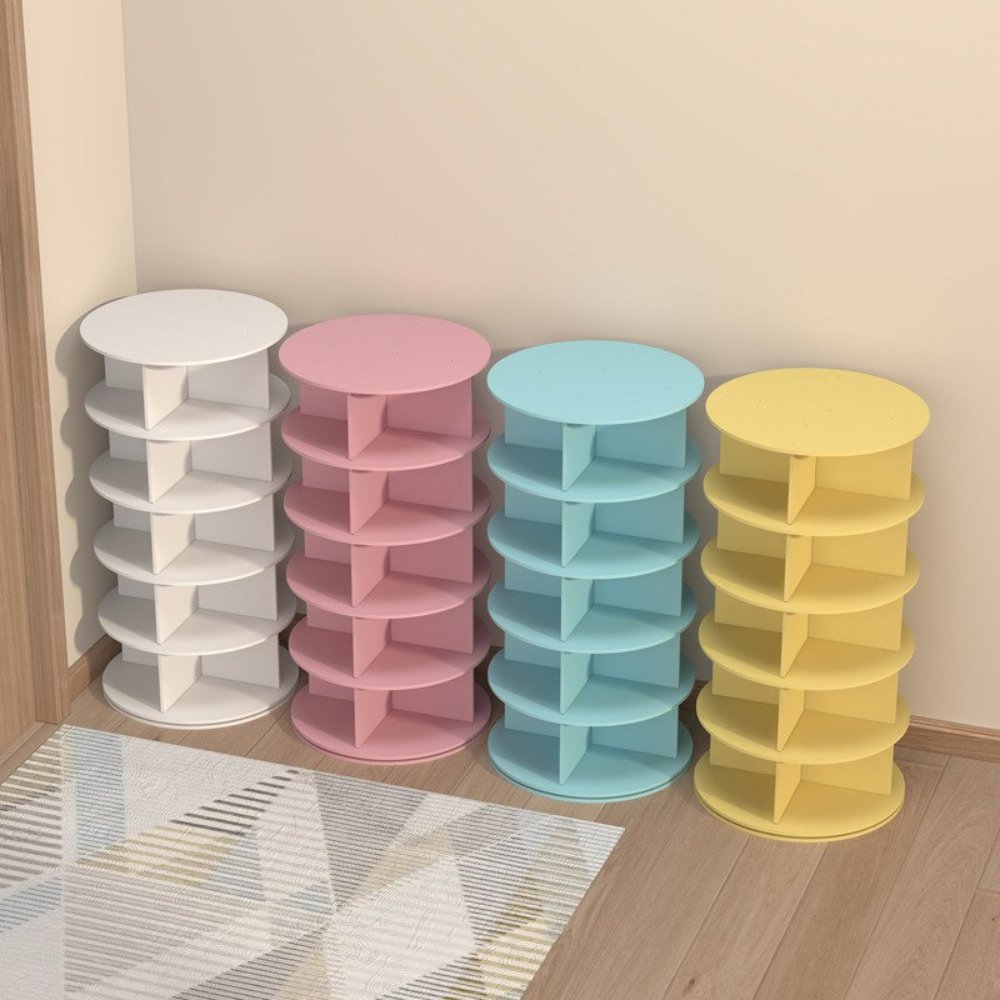
Empty catalogue rack references show shelves and partitions. Ask for usable-space dimensions for the specific offered version; the group is not a confirmed supplied assortment.
For a rotating-shoe-rack RFQ, ask for the usable dimensions of an identified compartment in the offered version. Separate its clear opening, usable shelf area and clear height from the rack’s overall outside dimensions. A layer count or styled photograph does not supply those measurements, so request a supplier-labelled drawing or sample record before making a footwear-fit statement.
For wholesale shoe racks, this turns a broad capacity question into a specific purchasing request. Identify the selected rack version, name the compartment being described and retain the supplier’s measuring references. The resulting record should explain what space is actually available at that location without converting catalogue props into a promised number of shoes.
Start with the actual offered layer version
The Multi-Tier Rotating Shoe Rack product page lists 3-Layer, 5-Layer and 7-Layer options, with Beige, Pink, Blue, Yellow, Brown and Black colour entries. Use those catalogue labels to identify the enquiry. The retained fields do not provide compartment dimensions or a confirmed maximum shoe size.
Ask the supplier for the exact version it is offering, then request the relevant dimensional record for that version. Do not assume that a measurement taken from one height option applies to every listed option. Keep the sample identifier or supplier item code beside the compartment reference so the response remains tied to the actual proposal.
Separate the opening from the space behind it
The catalogue appearance shows shelves and vertical partitions. Ask the supplier to identify the clear entry opening and the usable space within a named compartment. Request width and depth labels at the locations needed to interpret the space, rather than assuming that the outer shelf outline describes the whole compartment’s usable footprint.
Requested field
Reference to identify
Why it stays separate
Clear opening
Named entry location and dimensions
Access opening is not the entire shelf outline
Usable width
Supplier-labelled measuring location
Partitions can affect the available region
Usable depth
Named front and inner reference points
Overall outside size is a different field
Clear height
Identified shelf and overhead boundary
Layer count does not provide a clearance
Offered version
Item code and sample reference
Do not transfer another version’s geometry
Ask the supplier to mark the measuring locations on its drawing or reference image. Where the width changes across the compartment, request the locations relevant to the buyer’s enquiry instead of reducing the space to an unexplained single number. Keep the dimensions and their units with that marked reference.
Styled shoe-rack reference. Footwear, bags and decor are props, not supplied contents or an approved capacity statement.
Keep shelf clearance tied to its actual location
A clear-height record should identify the lower support surface and the overhead boundary used by the supplier. Ask whether different levels or compartments in the offered version have the same clearances, and request separate entries where they differ. The buyer should not derive a shelf gap by dividing an overall height by the listed layer count.
Likewise, ask which part of the supplier’s record represents usable space and which represents an overall product envelope. This article concerns the compartment itself. Floor footprint, turning clearance, packing dimensions and load specifications are separate enquiries and should not be inserted into the same dimension field.
Use a buyer reference without inventing shoe capacity
If the purchase requires a particular footwear reference, identify that reference and its relevant outside dimensions in the enquiry. Ask the supplier to explain how its offered compartment record relates to that reference. Do not use an unqualified shoe-size label or the number of shoes in a catalogue scene as a substitute for the missing dimensional information.
The catalogue photographs include footwear, bags and decorative objects. They illustrate an arrangement; they do not confirm supplied contents, a standardised footwear sample or a capacity test. Keep any supplier-confirmed fit statement scoped to the identified rack and footwear references rather than extending it to an entire category of shoes.
Different-height catalogue appearances. Layer labels do not supply clear shelf height, usable compartment width or a maximum shoe size.
Preserve the sample and drawing revision
Ask which sample the dimensional record represents and retain its identifier with the drawing or annotated image. If the offered partition arrangement, shelf configuration or version changes, request the corresponding revised record. This keeps an earlier compartment response from following a later proposal whose geometry has not been confirmed.
A purchasing colleague should be able to locate the selected rack version, the compartment reference, the marked measuring points and the applicable dimensions together. Keep unanswered locations visible. Recording an open question is more useful than adding a plausible measurement that cannot be traced to the supplier’s offered product.
Use a focused RFQ note
A practical request is: Please identify the offered rotating shoe-rack version and provide the usable dimensions of the marked compartment. Show the clear entry opening, usable width and depth at identified locations, and the clear height between named boundaries. Link the response to a sample and drawing revision, and identify any different clearances within the proposed version.
Identify the offered layer version and sample.
Mark the compartment and measuring locations.
Separate usable space from the outside product envelope.
Retain the supplier’s dimensions, units and revision.
Frequently asked questions
Does a 5-Layer label state the shelf clearance?
No. Request the clear-height record for the named compartment in the actual offered version.
Can the photographed shoe count be used as capacity?
The styled picture does not establish that. Ask for the supplier’s response against identified rack and footwear references.
Which record makes a width value understandable?
Keep the value and units with a marked measuring location, compartment identifier, offered version and sample or drawing revision.
shoe rack RFQusable compartment spacesupplier dimension record