
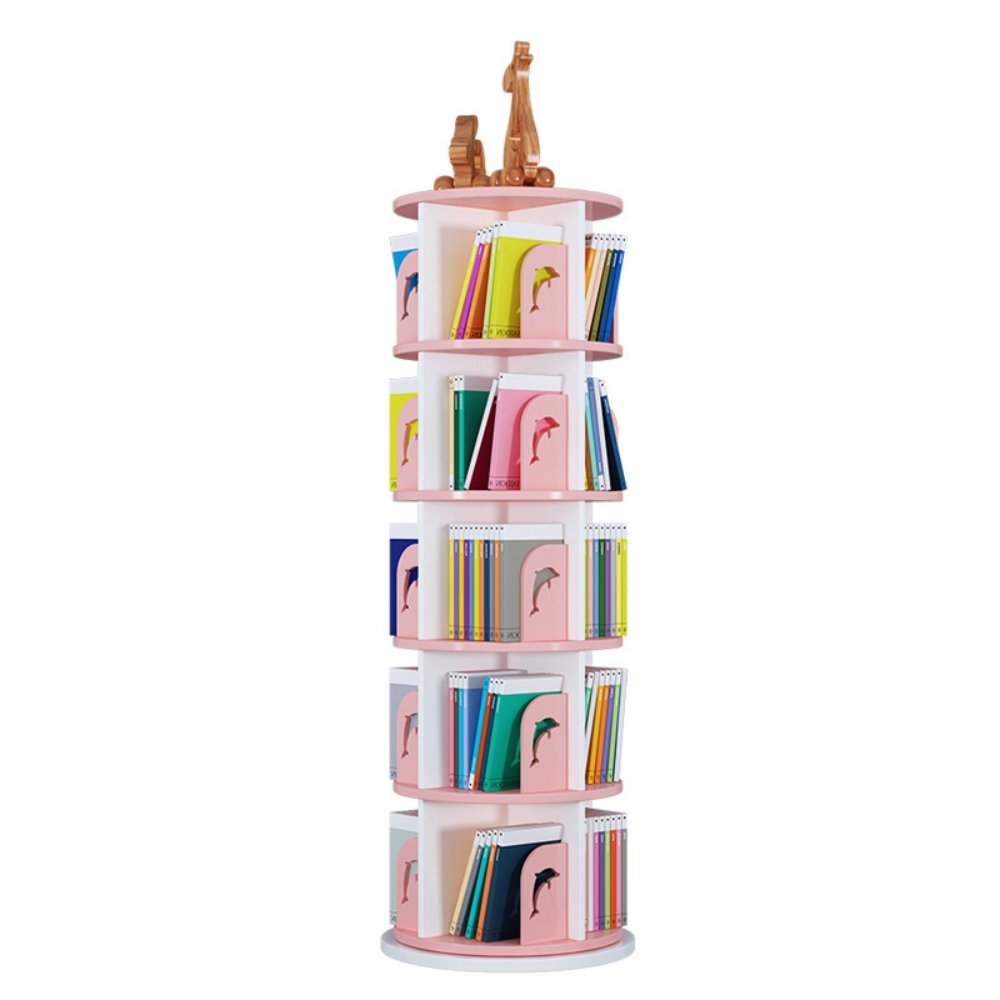
For Youran’s Rotating Bookshelf, treat “Finish: PVC” as a field whose component scope needs clarification. Ask which surfaces it describes and request the underlying material description for the offered parts. Keep the selected layer and colour variant on the same response sheet. This gives a wholesale bookshelf buyer a usable material record without turning a finish entry into an unsupported claim that every part is solid PVC or that the complete unit has a particular performance rating.
Official bookshelf appearance reference. Books and decorative objects do not establish the furniture’s material composition or included goods.
Preserve the actual product fields
The Rotating Bookshelf listing gives Colours: Pink, Blue; Sizes: 2-Layer, 3-Layer, 4-Layer, 5-Layer, 6-Layer; Finish: PVC; and Additional Features: Rotatable. Keep these as separate catalogue fields. The finish question should remain attached to the specific version your team wants quoted.
For a rotating bookshelf PVC finish scope enquiry, copy the original finish wording into a source column and give the supplier a response column beside it. Ask whether that wording applies to particular surfaces, components or another defined aspect of the offered construction. Request an explanation before adopting a more specific material description in your own product file.
Request surface and underlying material separately
Use this bookshelf finish versus core material RFQ table to organise the reply. Its component rows are places to request clarification, not declarations of how the shelf is made. Ask the supplier to use its own part names if they differ from the buyer’s reference labels.
Record field | Known starting point | Supplier response requested
Finish statement | PVC | Meaning and scope of the listed field
Horizontal parts | Visible round levels in the gallery | Part names, underlying materials and surface description
Upright parts | Visible vertical sections | Material and finish description by component
Base | Identify the offered version | Separate component and material description
Selected variant | Requested layer label and colour | Confirm which specification covers the offer
A helpful response identifies the component, underlying material and applicable surface description on the same row. If the supplier’s construction uses one material throughout a part, it can state that directly. If it uses separate surface and underlying materials, retain both descriptions without merging them into a single unsupported name.
Connect the response to a marked product reference
Official styled variant presentation. The current page names Pink and Blue; other pictured appearances require a separate offer confirmation.
Ask the supplier to mark its component names on a product picture or drawing. Save the marked reference beside the material table. This helps the buying team connect a term such as panel, upright or base with the intended part, especially when the supplier and buyer use different vocabulary.
If edges or reverse surfaces matter to your specification, add them as questions and ask whether the same finish statement covers them. Keep the answer associated with the marked component. The useful outcome is an understandable offered specification, rather than a general paragraph about PVC as a material.
A small material or finish sample should also carry a component reference. Ask the supplier to identify what that sample represents and which offered bookshelf version it belongs to. A loose sample with no part or model identification should remain an open reference until its scope is explained.
Retain the selected colour and layer version
The product lists two colours and five layer labels. State the particular selection your business wants reviewed, then ask whether the returned material schedule applies to that version. Keep a separate response if the supplier proposes another construction or finish for an alternative offer.
Official room-scene reference, used only for identifying the pictured bookshelf appearance, without a child-suitability or material claim.
Use the gallery to discuss appearance, including the contrast between coloured horizontal levels and lighter upright sections. Request actual surface references for the parts your team needs matched. Do not assign fibreboard, wood, a particular plastic or another core material merely from how those surfaces look.
Where several versions share a quotation, keep the material schedule’s coverage explicit. The supplier can identify the versions covered by a common statement or provide separate schedules. This makes a later change to one variant visible without automatically changing the material record for all the others.
Use a concise component declaration request
“For the linked Rotating Bookshelf in our selected layer and colour, please clarify what Finish: PVC covers. Return the material and surface description for the horizontal parts, upright parts and base, using a marked component reference. Identify the sample or specification version behind the response and list alternatives separately.” Add your selected variant and requested quantity.
Keep any performance requirements on separate enquiry lines. The finish label alone does not establish load capacity, water resistance, chemical resistance, stability or suitability for children. This guide does not adopt the broader PVC benefits in other articles as product-specific results. Its scope is the supplier’s actual component and finish declaration.
• Preserve the exact Finish: PVC source field.
• Request its component and surface scope.
• Keep underlying materials separate from surface descriptions.
• Connect the reply to the selected bookshelf version and dated reference.
Send the bookshelf component surface declaration request through Youran’s contact page. Other furniture in the product catalogue should retain its own material record.
Frequently asked questions
Does Finish: PVC mean the whole bookshelf is solid PVC?
That field alone does not define every part’s construction. Ask for the component material descriptions and finish scope.
Can the underlying material be identified from the photos?
Use the pictures to identify the parts being discussed, then request the supplier’s offered material statement.
Should every layer variant share one material schedule?
Ask which variants the returned schedule covers. Keep a separate response for a differently offered version.
What should accompany a finish sample?
Keep its part reference, selected model version, supplier identification and response date together.
Product and contact references
https://yrhomewares.com/product/rotating-bookshelf/
https://yrhomewares.com/contact/
https://yrhomewares.com/products/